THE MATERIAL IS THE DESIGN.
Four metals. Each with its own temperament.
Mild Steel
The backbone of everything we build.
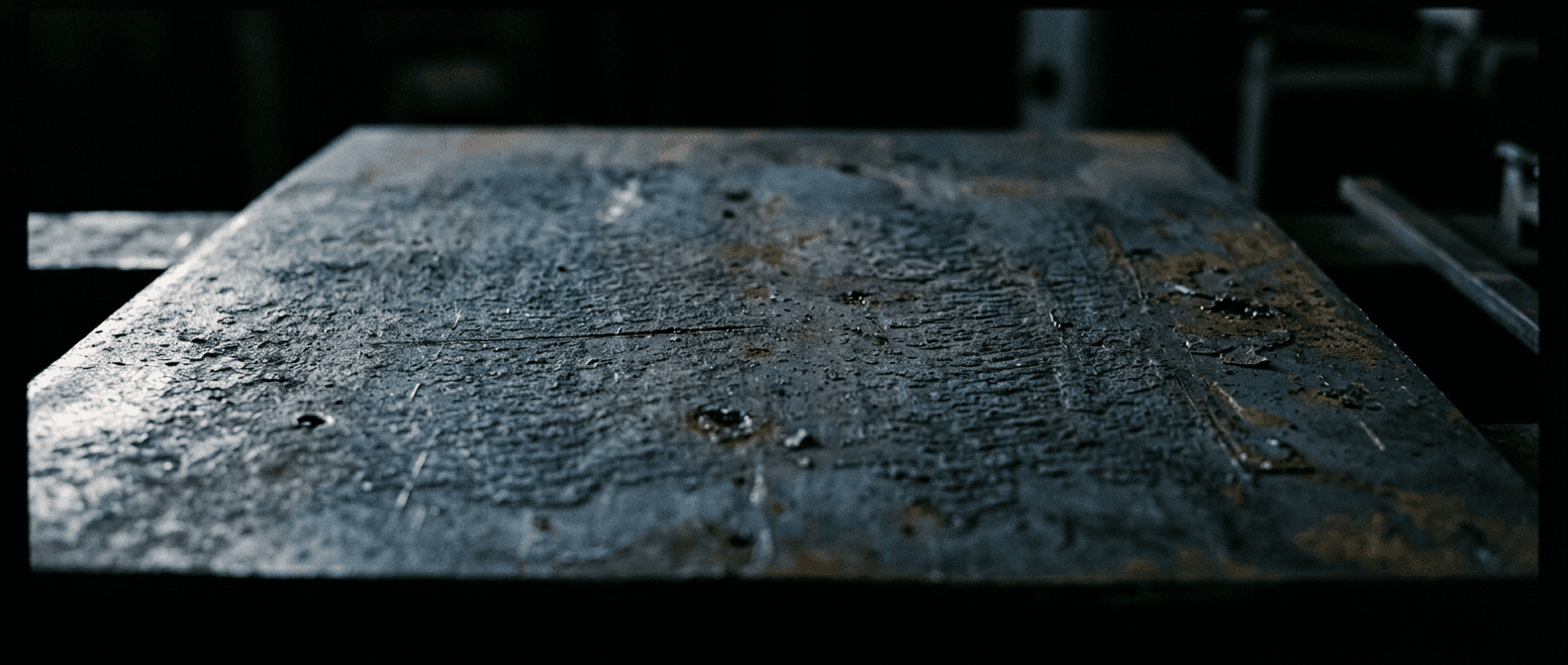
Low-carbon steel — the most versatile ferrous metal in fabrication. Easily cut, welded, forged, and formed. Accepts virtually any finish. Strong enough for structural applications, workable enough for fine detail. Every Blackforge commission starts with mild steel as the primary structure, even when other metals feature as the visible surface.
Raw mill scale (dark blue-grey, industrial), powder coat (any RAL colour, most commonly satin black or charcoal), hot-dip galvanise (zinc coating for exterior durability), hand-applied wax (warm, matte, shows the grain of the steel), mirror polish (labour-intensive, used for feature elements).
Gates, balustrades, structural frames, furniture bases, architectural screens, staircase structures. Anything that needs to bear load, span distance, or form the skeleton of a commission.
Brass
Warm metal. Ages with dignity.
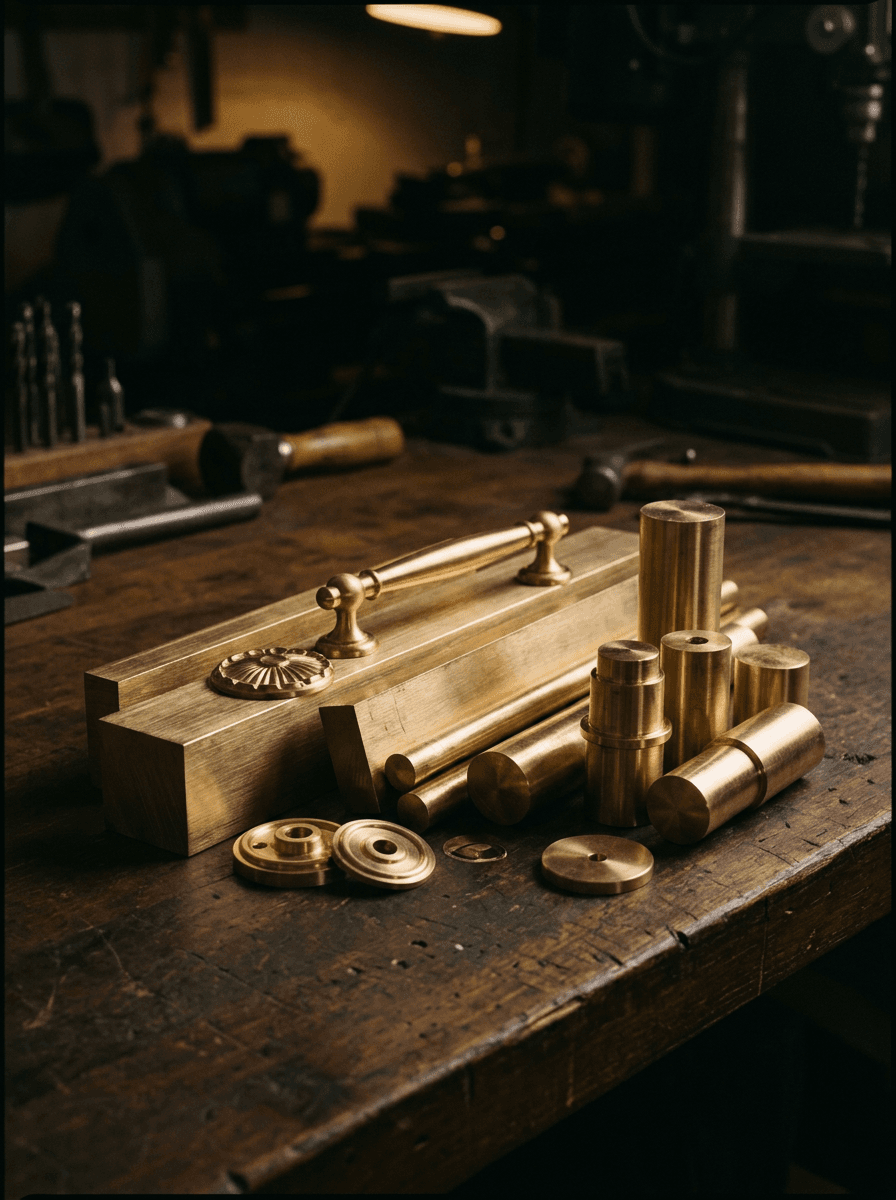
A copper-zinc alloy with a warm golden tone that deepens over time. We use solid brass exclusively — never plated, never clad. Plating wears through in years. Solid brass develops a patina that only improves. Heavier than steel by volume, softer to machine, and significantly more expensive. Every brass element in a Blackforge commission is there because no other material would do.
Brushed (directional satin, most common), polished (high mirror, requires ongoing maintenance), antiqued (chemically darkened for aged appearance), lacquered (clear coat to slow patina — we advise against this), raw (left to patina naturally — our recommendation for most applications).
Handles, handrail caps, inlay details, rosette elements, junction features, furniture hardware. Brass is the detail metal — it appears at the points where your hand meets the steel.
Copper
Time is the final craftsman.
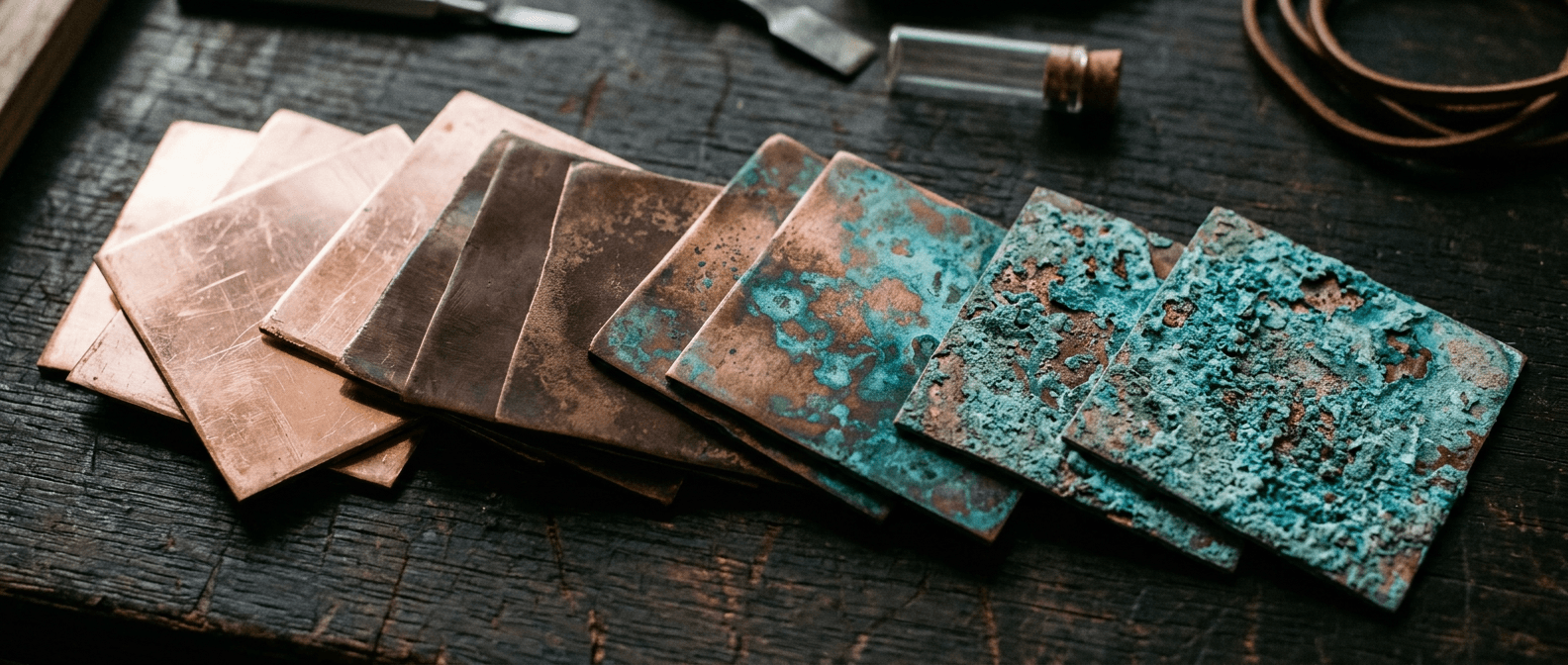
Pure elemental copper — one of the oldest metals in human use. Begins as a warm rose-gold, darkens to chocolate brown within months, and develops verdigris (the distinctive blue-green patina) over years to decades depending on climate and exposure. Cape Town's salt air accelerates the patina cycle. Copper is antimicrobial, infinitely recyclable, and requires zero maintenance if left to weather naturally.
Raw (our recommendation — let time do the work), patinated (chemically accelerated to a specific stage, then sealed), sealed at rose stage (lacquered while still new — stops the clock), waxed (slows patina, warm satin feel). We always present a patina timeline to clients so they understand what the surface will look like at 6 months, 2 years, and 10 years.
Cladding, water features, statement surfaces, sculptural elements. Copper is reserved for surfaces where the patina lifecycle is the design intent — where the piece is meant to change and improve over its lifetime.
Corten Steel
The rust IS the finish.
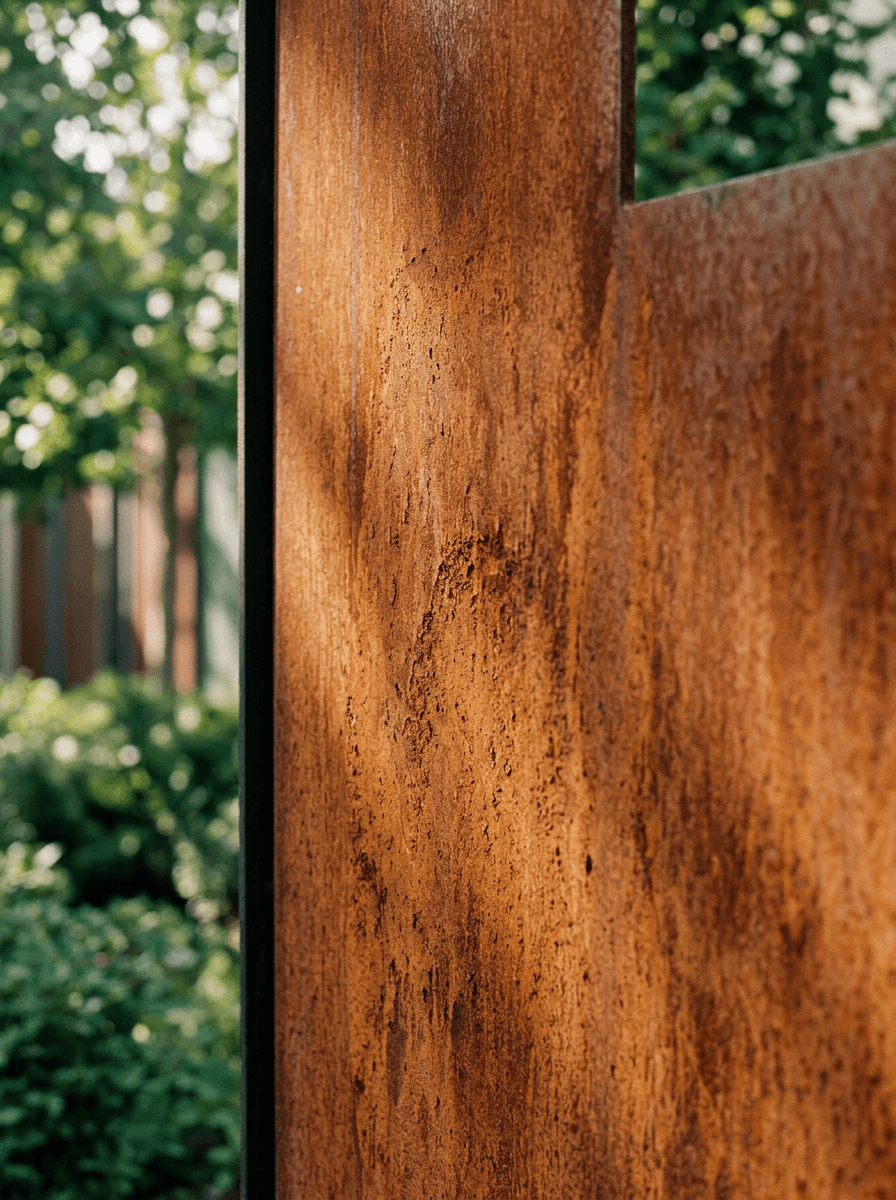
Weathering steel — an alloy designed to rust on purpose. The surface develops a stable oxide layer that protects the underlying metal from further corrosion. No paint required. No maintenance. The patina deepens from orange to deep brown over 1–3 years, then stabilises. We weather all corten on-site before client handover so the initial orange phase happens under our control, not on the client's new terrace.
Natural weathering (the standard — we pre-weather for 3–6 months), accelerated patina (chemical treatment for faster oxidation), sealed at stage (clear coat applied at a specific patina depth), raw mill finish (silver-grey, not yet oxidised — rarely specified).
Firepits, exterior screens, garden sculpture, boundary walls, planters, water features. Corten is an exterior metal — it needs moisture and air to develop its protective layer. We don't recommend it for interior applications.
At a Glance
Common Pairings
Structure meets warmth. Steel frames, brass details. The most common Blackforge pairing — 60% of commissions use this combination.
Industrial meets organic. The dining table combination. Hot-rolled steel legs, hand-oiled hardwood tops. Weight below, warmth above.
Two materials that age. Exterior installations that improve with time. Both develop protective patinas — one rust, one verdigris.